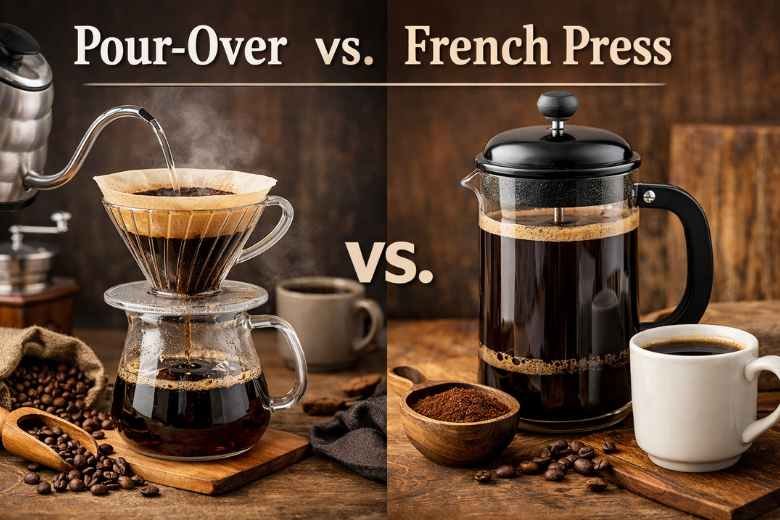
Coffee is more than just a drink; it’s an experience. With so many brewing methods available, it’s easy to get overwhelmed by the choices. Compare coffee brewing methods like pour-over and French press. Which one is easier to make? Both offer distinct flavors and brewing processes, making them favorites among coffee lovers worldwide. But when it comes to ease of use, which one reigns supreme? In this article, we’ll explore both methods in detail, comparing everything from flavor profiles to ease of brewing, so you can make an informed choice about your next cup.
The Pour-Over Brewing Method: A Precise and Controlled Technique
Pour-over coffee is a manual brewing method that relies on precision and technique. In this process, hot water is poured over freshly ground coffee beans that are placed in a filter. The water then passes through the grounds and drips into a carafe or mug below. The pour-over method allows you to have full control over the brewing process, which is one of its main appeals. However, it also requires a steady hand and a bit of practice.
Key Steps in Pour-Over Brewing
- Prepare the Coffee Grounds: Measure out your coffee beans and grind them to a medium-coarse consistency, which is similar to sea salt. The grind size is crucial for getting a balanced brew, so make sure to use the right setting on your grinder.
- Set Up the Equipment: Place a coffee filter into your pour-over dripper (such as a Chemex or V60) and set it on top of your mug or carafe. Be sure to wet the filter first with hot water to remove any paper taste and to help the filter stick to the dripper.
- Boil the Water: Heat your water to just below boiling, ideally around 200°F (93°C). This is the ideal temperature for brewing pour-over coffee, as it extracts the best flavors from the grounds.
- Pour the Water: Start by pouring a small amount of water over the grounds to wet them and allow them to “bloom”—this process helps release carbon dioxide from the coffee, which improves the extraction. After blooming, pour the remaining water in a slow, circular motion, ensuring the grounds are evenly saturated.
- Wait for Brewing to Finish: Allow the water to fully pass through the grounds and filter. The brewing process typically takes about 3 to 5 minutes, depending on how fast you pour and the grind size.
The pour-over method is prized for the clarity and purity of the coffee’s flavor. Because it uses a paper filter, it results in a clean cup with bright, distinct flavors. Pour-over is perfect for highlighting the nuanced flavors in single-origin coffees, such as fruity, floral, or nutty notes. However, the technique does require some practice to get the pour speed and water distribution just right. While not overly complicated, it is a method that rewards attention to detail and patience.
The French Press Brewing Method: A Simpler, Hands-Off Approach
In contrast to pour-over coffee, the French press (also known as a press pot or cafetière) is a more straightforward and less hands-on brewing method. It involves steeping coarsely ground coffee in hot water for several minutes before pressing the grounds with a plunger to separate them from the brewed coffee. This method is known for producing a rich, full-bodied cup of coffee.
Key Steps in French Press Brewing
- Prepare the Coffee Grounds: Measure out your coffee beans and grind them coarsely, similar to the texture of breadcrumbs. The grind size is important, as too fine a grind can result in over-extraction and bitterness.
- Boil the Water: Heat water to around 200°F (93°C), just below boiling. This is the perfect temperature to extract the full range of flavors from the coffee without over-extracting and making the brew too bitter.
- Add Coffee Grounds to the French Press: Add the coarsely ground coffee to the French press. The standard ratio is about 1:15, with 1 part coffee to 15 parts water, but you can adjust this depending on your taste preference.
- Pour the Water: Pour the hot water over the coffee grounds, ensuring that all the grounds are evenly saturated. Stir gently to ensure the coffee is fully mixed.
- Steep the Coffee: Place the lid on the French press and let the coffee steep for about 4 minutes. This allows the grounds to release their flavors and oils into the water.
- Press the Coffee: After steeping, slowly press the plunger down to separate the brewed coffee from the grounds. Be careful not to press too quickly, as this can cause the grounds to escape the filter and end up in your cup.
- Serve and Enjoy: Pour the freshly brewed coffee into your mug and enjoy the rich, bold flavor. French press coffee has a fuller body compared to pour-over, thanks to the oils and fine particles that remain in the brew.
The French press is loved for its robust, intense flavor and its fuller mouthfeel. Because the coffee is brewed with all its oils, the result is a more substantial cup. The method also preserves some of the finer coffee grounds, which contribute to the flavor profile. However, some people may not enjoy the slight sediment that can appear in the cup, though others find it adds to the charm of French press coffee.
Comparing the Flavors: Pour-Over vs. French Press
Both pour-over and French press coffee methods produce excellent coffee, but they offer different taste experiences.
- Pour-Over Coffee: The pour-over method tends to produce a clean, crisp cup with a lighter body. Since the coffee is filtered through paper, the coffee is free from oils and fine particles, allowing the flavors to shine through with clarity. This makes pour-over ideal for highlighting the unique, complex flavors found in single-origin coffees, such as fruity, floral, or nutty notes.
- French Press Coffee: In contrast, French press coffee has a richer, fuller body due to the oils and particles retained in the brew. This results in a more intense, bold flavor with less acidity. The method is perfect for those who enjoy a more robust coffee and is especially great for dark roasts or coffee blends with deep, strong flavors.
Ease of Brewing: Which Method is Simpler?
When it comes to ease of brewing, the French press is generally considered the simpler of the two methods. The pour-over technique requires a bit more skill and attention to detail, while the French press is relatively hands-off.
- Pour-Over Brewing: Pour-over coffee takes more time and practice to master. It requires a consistent pour rate and careful control over the water flow to ensure an even extraction. While the process is straightforward once you get the hang of it, it does require practice, especially if you’re using specialty equipment like a gooseneck kettle for precision pouring.
- French Press Brewing: The French press is easier to master. Once you’ve added the coffee grounds and water, the process is largely hands-off. The steeping time is about 4 minutes, and all you need to do afterward is press the plunger. The French press method doesn’t require any special pouring technique or precision, making it more forgiving and quicker.
Cleanup: Which is Easier?
- Pour-Over Cleanup: The cleanup for pour-over coffee can be a little more involved. After brewing, you’ll need to discard the filter and coffee grounds. If you’re using reusable filters, they’ll need to be washed thoroughly, which can be a bit of a chore. Additionally, the dripper and carafe will need to be cleaned.
- French Press Cleanup: French press cleanup is easier and quicker. After pressing the coffee, you simply rinse the plunger and carafe. Some coffee grounds may stick to the sides, but it’s generally a quick and easy task. The French press setup is also less likely to spill or cause a mess during cleanup.
Final Thoughts: Which One is Easier to Make?
If you’re looking for simplicity and convenience, the French press is the clear winner. It’s quicker, requires less precision, and is generally easier for beginners. Once you get your coffee grounds and water ratio right, it’s smooth sailing.
On the other hand, pour-over brewing is ideal for those who love precision and a clean, refined cup of coffee. It’s a method that takes some practice but can yield excellent results for those willing to invest the time and effort. While it might take a bit longer, it offers a higher degree of control over the brewing process and can result in a coffee that highlights subtle flavors.
Check out more articles at: QuantumRun
