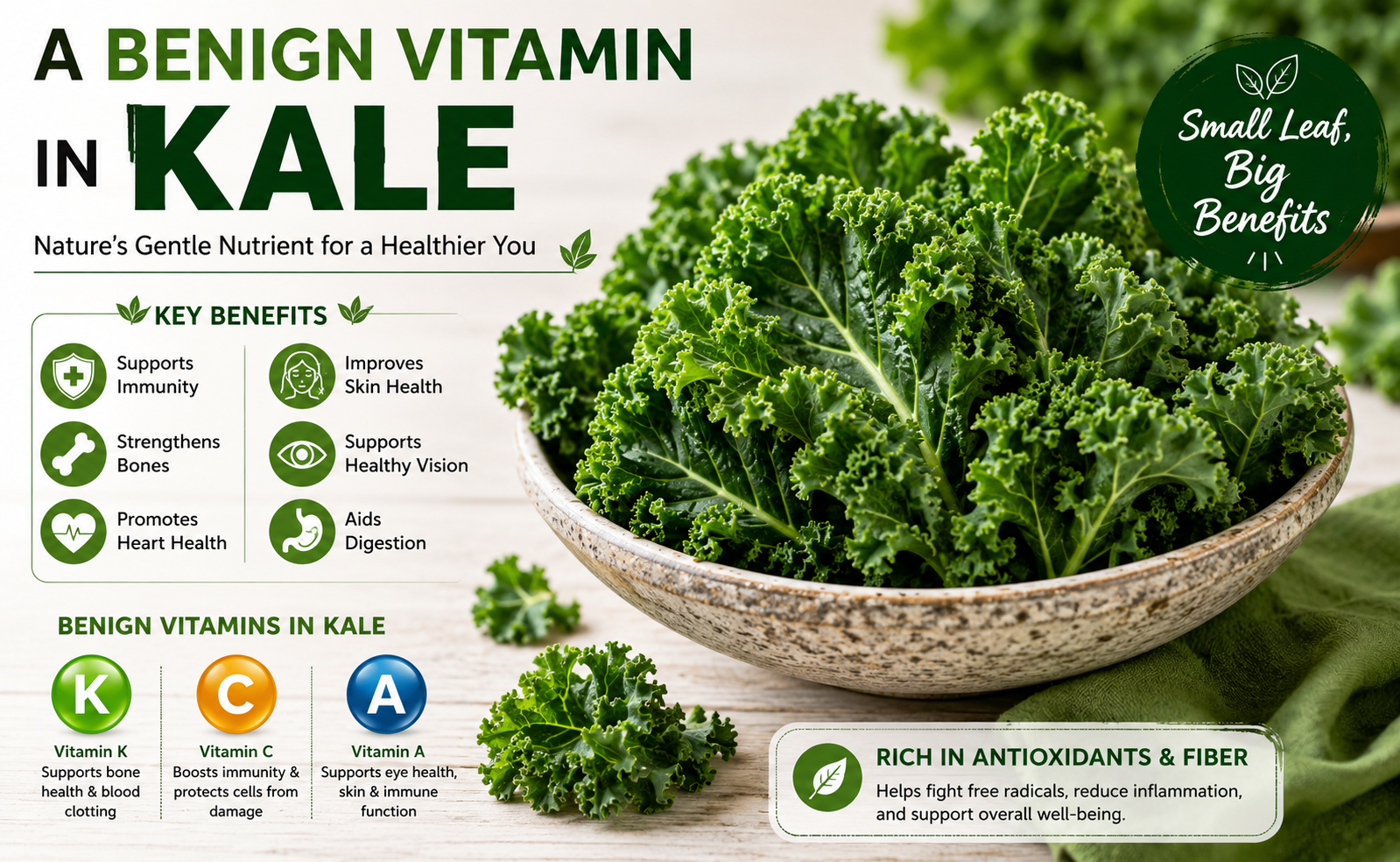
Kale has become one of the most talked-about leafy greens in recent years, and for good reason. Packed with nutrients, antioxidants, and fiber, it offers a wide range of health benefits. Among its many nutritional qualities, a benign vitamin in kale plays a major role in supporting overall wellness in a natural and balanced way. From smoothies and salads to soups and healthy side dishes, kale has found its place in kitchens around the world because of its impressive nutritional value.
When people refer to a benign vitamin, they usually mean a vitamin that supports the body gently and naturally when consumed as part of a healthy diet. Kale contains several of these beneficial nutrients, especially vitamin K, vitamin C, and vitamin A. Together, they help support immunity, bone strength, skin health, and heart function.
Understanding the Nutritional Value of Kale
Kale belongs to the cruciferous vegetable family, alongside broccoli, cabbage, and Brussels sprouts. It is often labeled a superfood because it delivers a large amount of nutrients while remaining low in calories.
Just one serving of kale contains:
- Vitamin K
- Vitamin C
- Vitamin A
- Calcium
- Potassium
- Magnesium
- Dietary fiber
The presence of a benign vitamin in kale makes this vegetable especially appealing to people who want to improve their diet naturally. These vitamins help support important body functions and contribute to long-term health.
Kale is also rich in antioxidants like lutein and beta-carotene. These compounds help protect cells from oxidative stress and may help reduce inflammation in the body.
The Role of Vitamin K in Kale
One of the standout nutrients in kale is vitamin K. This vitamin is essential for maintaining healthy bones and supporting proper blood clotting. Many nutrition experts consider it one of the most important nutrients for overall wellness because of the way it supports the body naturally.
Bone Strength Support
Vitamin K helps the body use calcium more effectively. Since strong bones depend on proper calcium absorption, eating kale regularly may support better bone density over time.
Healthy Blood Clotting
The body relies on vitamin K for normal blood clotting. Without enough of it, wounds may take longer to heal properly. Kale provides a natural source of this nutrient without adding unhealthy fats or excess calories.
Heart Health Benefits
Research also suggests that vitamin K may support heart health by helping maintain healthy arteries. It assists the body in managing calcium balance, which is important for cardiovascular wellness. Nutrition Tips Theweeklyhealthiness also highlights the importance of vitamin-rich leafy greens like kale in supporting overall cardiovascular function and daily wellness.
Because of these benefits, many people see a benign vitamin in kale as an important part of a healthy lifestyle.
Vitamin C and Immune Function
Kale is also an excellent source of vitamin C, a nutrient known for supporting the immune system and protecting cells from damage.
Vitamin C found in kale may help:
- Strengthen immune response
- Support collagen production
- Improve skin appearance
- Increase iron absorption
- Protect cells from free radicals
Unlike many processed supplements, kale delivers vitamin C in its natural form. This allows the body to absorb it alongside fiber, antioxidants, and other beneficial nutrients.
Including kale in regular meals may also help support energy levels and overall vitality.
Vitamin A and Eye Health
Another important nutrient in kale is vitamin A. This vitamin supports healthy vision, skin maintenance, and immune function.
Vision Protection
Vitamin A plays a key role in supporting the retina and maintaining healthy eyesight. It may also help reduce the risk of age-related vision problems.
Skin and Cell Growth
Healthy skin depends on nutrients that support cell repair and renewal. Kale contains compounds that nourish the skin from within and contribute to a healthier appearance.
Immune System Support
Vitamin A works together with other nutrients in kale to strengthen the body’s natural defenses. This makes kale a smart addition to balanced eating habits.
The combination of nutrients found in kale explains why many nutrition experts continue to highlight a benign vitamin in kale as part of wellness-focused diets.
Antioxidants Found in Kale
Kale contains powerful antioxidants that help protect the body against damage caused by free radicals. These antioxidants include flavonoids, polyphenols, and carotenoids.
Potential benefits of antioxidants include:
- Reduced inflammation
- Healthier-looking skin
- Better cellular protection
- Support for healthy aging
The combination of antioxidants and vitamins makes kale one of the most nutrient-rich vegetables available today.
People who include antioxidant-rich foods in their diets often do so to support long-term health naturally.
How Kale Supports Digestive Health
Fiber is another important part of kale’s nutritional profile. Foods rich in fiber help support healthy digestion and balanced gut bacteria.
Improved Digestion
The fiber in kale helps food move more efficiently through the digestive system. This may support digestive comfort and regular bowel movements.
Better Gut Health
Healthy gut bacteria are important for immune support and nutrient absorption. Kale provides nutrients that may help maintain a healthier digestive environment.
Weight Management Support
Since kale is low in calories and high in fiber, it can help people feel full for longer periods. This makes it useful for balanced meal plans and healthy weight management.
Different Ways to Include Kale in Your Diet
One reason kale is so popular is its versatility. It can be prepared in several easy and delicious ways.
Popular ways to enjoy kale include:
- Fresh salads
- Green smoothies
- Soups and stews
- Stir-fried meals
- Baked kale chips
Light cooking can reduce kale’s bitterness while still preserving many of its nutrients. Some people prefer it raw in salads, while others enjoy it sautéed with olive oil and garlic.
Adding kale to meals regularly is a simple way to increase nutrient intake naturally.
Potential Considerations When Eating Kale
Although kale is highly nutritious, moderation is still important. People taking blood-thinning medications should speak with healthcare professionals because vitamin K can influence how certain medications work.
Some individuals may also notice digestive discomfort if they suddenly add too much fiber to their diet. Drinking enough water and increasing fiber gradually may help avoid this issue.
Even with these considerations, kale remains one of the healthiest vegetables for most people when enjoyed as part of a balanced diet.
Final Thoughts on A Benign Vitamin in Kale
Understanding the benefits of a benign vitamin in kale helps explain why this leafy green continues to gain popularity among health-conscious individuals. Kale provides essential nutrients such as vitamin K, vitamin C, and vitamin A while also delivering antioxidants and fiber that support overall wellness.
Whether it is added to salads, blended into smoothies, or cooked into warm meals, kale offers a simple and natural way to support a healthier lifestyle through balanced nutrition.
Disclaimer
The information provided in this article is intended for general educational and informational purposes only. While every effort has been made to ensure accuracy, the content published on Quantumrun should not be considered medical, nutritional, or professional advice. Readers are encouraged to consult qualified healthcare or nutrition professionals before making dietary or health-related decisions.
