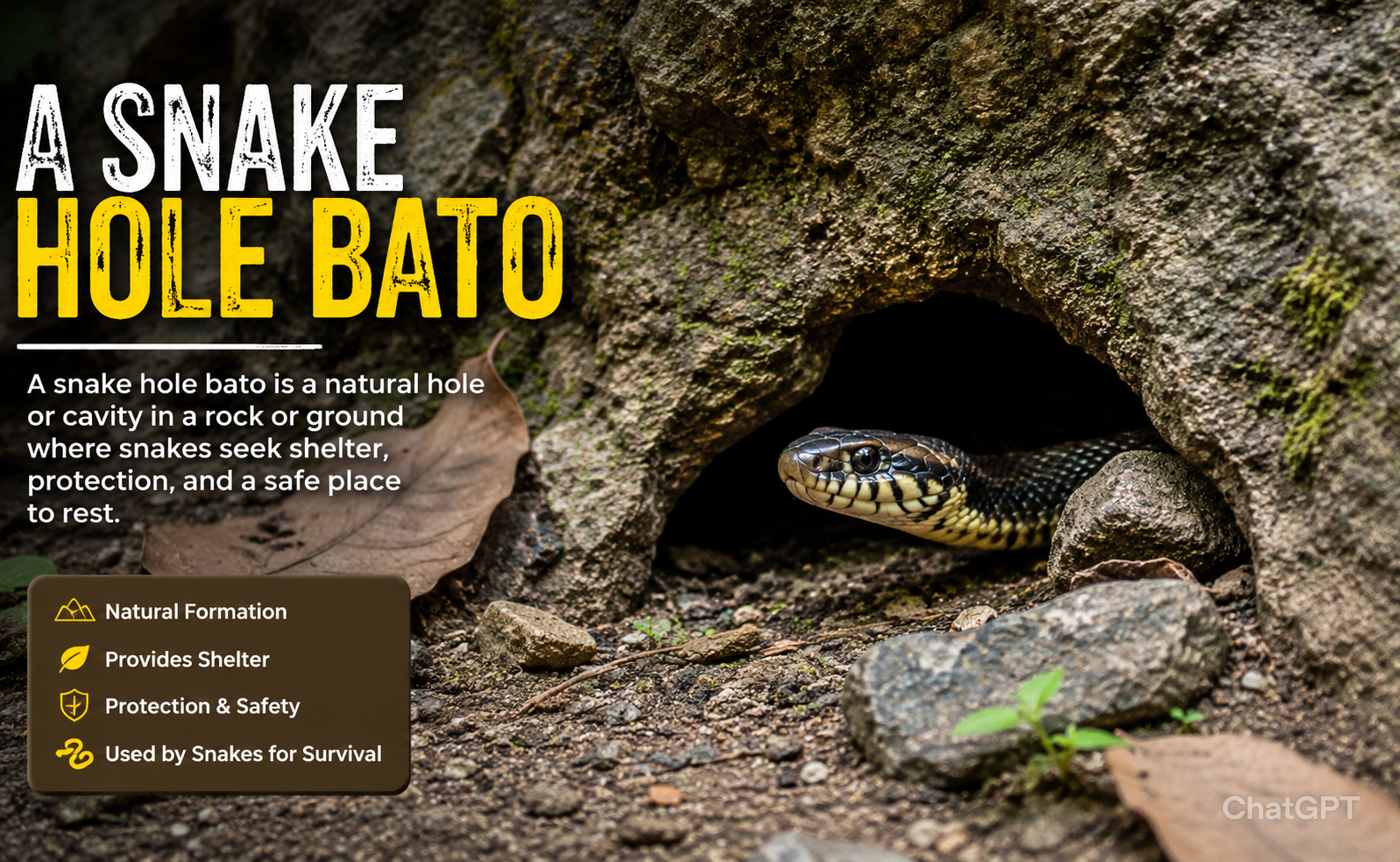
A snake hole bato is a simple way people describe small natural holes or openings found in rocky ground or soil where snakes may take shelter. In rural and semi-rural areas, this term is often used when spotting places that look like hidden resting spots for reptiles. Learning about a snake hole bato gives a better understanding of how wildlife behaves and how nature quietly shapes the land around us.
It’s not just about snakes. These spaces also connect to soil movement, rock formations, and natural balance in the environment. In many ways, it’s a small but interesting part of the natural world that often goes unnoticed.
What Is a Snake Hole Bato?
A snake hole bato usually refers to a small opening, tunnel, or cavity found in soil, stones, or rocky areas. These gaps are formed naturally over time through erosion, water flow, or shifting ground.
Snakes may use these spaces as shelter to escape extreme heat, cold weather, or danger from predators. Sometimes they also serve as quiet resting spots during the day.
In many places, these holes are part of the natural landscape, though they are not always easy to notice. Some are hidden under rocks, grass, or loose soil.
These formations are more common in dry or semi-dry regions where the ground tends to crack and create natural hiding spaces.
How Snake Holes Form in Bato Landscapes
A Snake Hole Bato: meaning and wildlife shelter. Why innerlifthunt game postponed. Forms slowly over time from weather, soil and animal activity. SEO meta.
1. Erosion and Water Flow
Rainwater gradually wears down soil and weak rock layers. Over time, this creates small gaps, tunnels, and hollow spaces.
2. Loose Rocky Structures
In areas where rocks are broken or loosely packed, small openings naturally develop. These become perfect hiding spots for small creatures.
3. Animal Activity
Some holes start with insects or small animals digging into the ground. Later, snakes may take over these abandoned shelters.
4. Soil Drying and Cracking
In hot climates, soil often dries out and shrinks. This causes cracks and openings that can eventually become snake shelters.
Each snake hole bato is unique depending on the local environment and ground conditions.
Why Snakes Prefer Snake Hole Bato Areas
Snakes are very adaptable and choose their shelter carefully. A snake hole bato offers them safety and comfort in several ways.
These include:
- Protection from extreme weather conditions
- Safety from predators and human disturbance
- Easy access to food sources like insects and rodents
- A cool, stable environment for resting
In hotter regions, these holes become especially important. Snakes often stay hidden during the day and become active at night when temperatures drop.
Safety Concerns Around Snake Hole Bato
People living near natural landscapes often stay alert around snake hole bato areas. While snakes usually avoid humans, accidental encounters can still happen if their shelter is disturbed.
Common Safety Practices
- Never put hands or sticks into unknown holes
- Wear closed and protective footwear in rocky areas
- Keep surroundings clean to reduce rodents that attract snakes
- Use proper lighting when walking at night in rural places
Simple awareness can go a long way in preventing unnecessary risks. Respecting wildlife spaces helps maintain a safer environment for both humans and animals.
Ecological Importance of Snake Hole Bato
A snake hole bato is more than just a hiding place. It plays an important role in maintaining the balance of nature.
Natural Pest Control
Snakes help reduce the number of rodents and insects, which protects crops and stored food supplies.
Soil and Ecosystem Health
These small openings allow air to circulate in the soil and support underground life systems.
Balance in the Food Chain
Snakes are both predators and prey, helping maintain a stable ecological cycle.
Without such natural shelters, ecosystems would become less balanced over time.
Human Perception of Snake Hole Bato
In many communities, a snake hole bato is often viewed with fear or caution. This usually comes from lack of knowledge about snake behavior rather than actual danger.
Farmers and rural residents often learn through experience how to recognize and avoid disturbing these areas. Over time, awareness has improved, and many people now understand that not every hole means immediate danger.
Better knowledge has helped reduce unnecessary fear and encouraged more respect for wildlife.
Identifying a Snake Hole Bato in Nature
Spotting a snake hole bato is not always easy, especially from a distance. However, some common signs may include:
- Small round or oval holes in soil or rock
- Shed snake skin nearby
- Light tracks or movement marks around the area
- Quiet surroundings with little disturbance
Even if these signs are present, it’s always best to avoid close inspection for safety reasons.
Conclusion
A snake hole bato is a natural part of the environment formed through slow geological changes and often used by snakes as shelter. It represents the quiet connection between wildlife and their habitat. While it may seem concerning at first glance, it is actually an important and functional part of nature’s ecosystem.
Disclaimer
The content provided here is for general informational and educational purposes only. It is not intended as professional wildlife, environmental, or safety advice. Readers should use their own judgment and seek guidance from qualified experts when dealing with wildlife or potentially risky natural environments.
