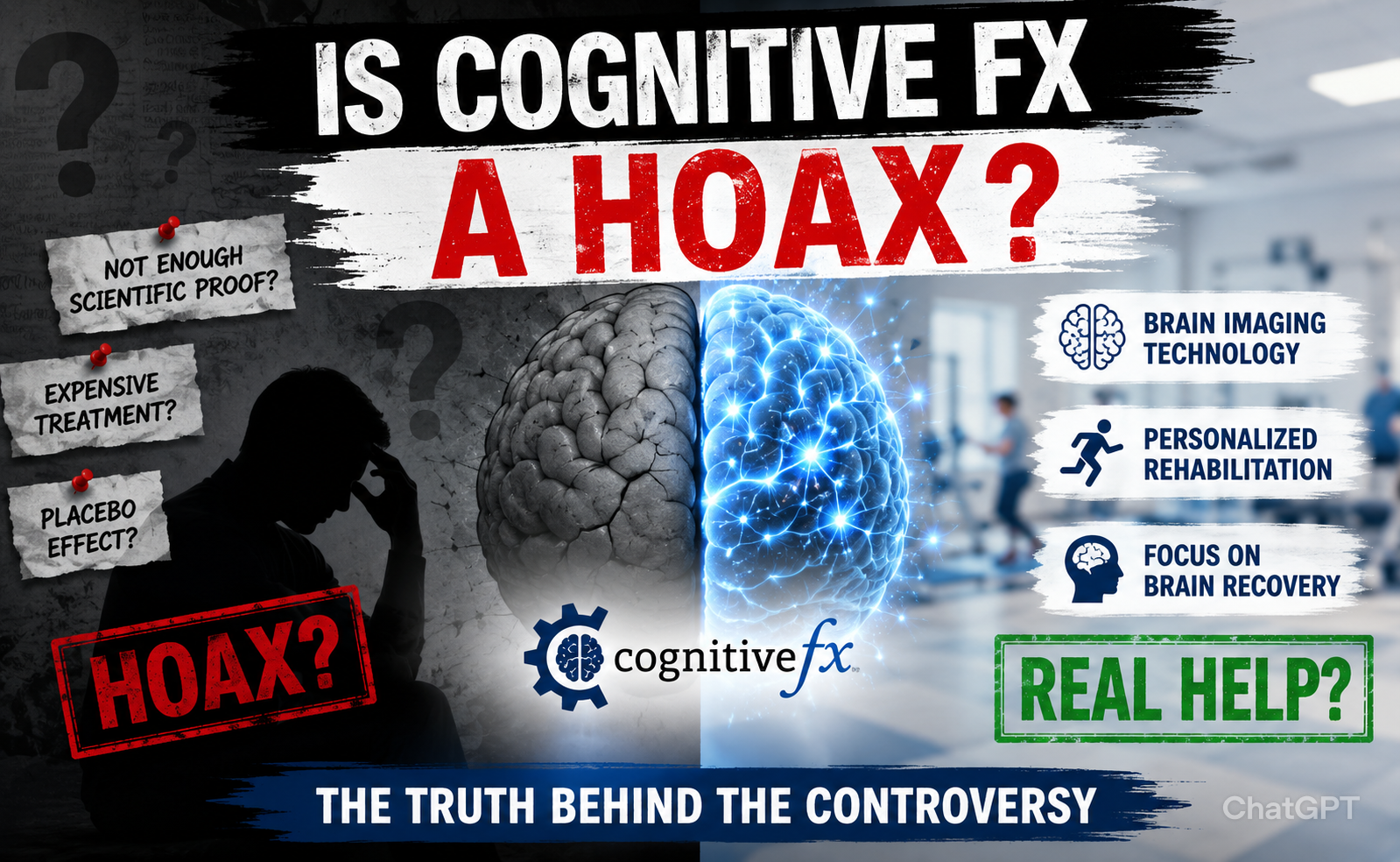
In recent years, the question is cognitive fx a hoax has been showing up more often in online searches as people try to understand brain injury recovery programs and different neurorehabilitation approaches. Cognitive FX is frequently mentioned in discussions about concussion recovery, post-concussion syndrome, and symptoms like brain fog. This article takes a balanced look at the topic in a simple and clear way, helping readers understand the different opinions and concerns surrounding it.
Understanding Cognitive FX and Its Core Claims
Cognitive FX is a private treatment program designed to help people recover from symptoms linked to concussions and mild traumatic brain injuries. It is known for combining brain imaging methods with structured therapy sessions.
The program claims it can help with issues such as memory problems, fatigue, dizziness, anxiety, and trouble concentrating. These symptoms are commonly seen in post-concussion syndrome (PCS), which can last for weeks, months, or even longer.
However, the question is cognitive fx a hoax comes up because people and experts do not always agree on how effective or scientifically proven these methods are. While the program uses modern tools and a structured process, some critics believe it is not fully supported by mainstream medical evidence.
How the Program Works in Practice
Cognitive FX usually runs as an intensive, multi-day program. Patients take part in cognitive exercises, light physical activities, and emotional regulation training.
The idea is to gently push the brain into activity in a controlled setting. Some people say they feel better after completing the program, while others report more gradual or limited changes depending on their condition.
Scientific Debate and Skepticism
The debate around is cognitive fx a hoax A_Coolsnake Roblox is closely tied to the question of scientific proof. Brain injury recovery is a well-studied medical area, but not every treatment approach has the same level of research behind it.
Many medical professionals agree that concussion recovery is complex and different for every person. Because of this, some experts feel that intensive programs may not be necessary for all patients.
At the same time, critics point out that there is limited large-scale clinical research available publicly that clearly compares Cognitive FX with standard rehabilitation methods.
Evidence and Medical Concerns
One of the main concerns is the lack of large, controlled clinical trials. Without this type of research, it is difficult to measure how effective the program truly is compared to other treatments.
Another factor often discussed is the placebo effect. When people strongly expect improvement, they may temporarily feel better due to psychological influences and structured care environments.
Still, this does not automatically mean is cognitive fx a hoax. It simply suggests that more independent research is needed before making strong conclusions.
Patient Experiences and Mixed Reviews
When people ask is cognitive fx a hoax, personal experiences often shape the answer they find online. Many individuals who have tried the program share positive feedback.
Some report clearer thinking, less brain fog, and improved energy after completing the sessions. These stories contribute to the program’s popularity and growing awareness.
However, not all experiences are the same. Some patients report only small improvements, while others feel the benefits did not last long or did not match expectations.
Why Results Are Different for Everyone
Recovery from brain injuries is not the same for everyone. It depends on many factors such as the severity of the injury, age, mental health, and overall health history.
Because of these differences, it is difficult to label the program in simple terms. Instead of answering is cognitive fx a hoax with a yes or no, many professionals suggest viewing it as one possible support option rather than a guaranteed solution.
Marketing, Expectations, and Public Perception
Another reason the question is cognitive fx a hoax continues to circulate is due to how the program is presented and discussed online.
The treatment is often described in a very hopeful and positive way, which can raise expectations. Some people may assume it will deliver fast or complete recovery, which is not always realistic for brain-related conditions.
When expectations are not met, disappointment can lead to skepticism or criticism.
At the same time, strong marketing alone does not prove that a treatment is ineffective. It simply highlights the need for clear communication and realistic expectations.
The Importance of Hope in Recovery
Hope can play a meaningful role in recovery journeys. Many people dealing with long-term post-concussion symptoms feel frustrated and unsure where to turn.
In such situations, structured care and attention can make patients feel supported and more motivated. Even when results vary, emotional support and guided therapy may still provide some benefit.
This is why the discussion around is cognitive fx a hoax is not only medical but also emotional and psychological.
Final Thoughts on the Debate
There is no simple answer to the question is cognitive fx a hoax. Based on current perspectives, it is more accurate to describe Cognitive FX as a debated and controversial treatment approach rather than a clearly proven or completely discredited one.
Some people report meaningful improvements, while others remain unsure about its effectiveness. Like many areas of brain injury recovery, outcomes can vary widely from person to person.
Disclaimer
The information provided in this article published on Quantumrun is intended for general informational and educational purposes only. It is based on general understanding and public discussions of the topic. It should not be considered medical advice or a substitute for professional consultation. Readers are encouraged to seek guidance from qualified healthcare professionals before making any medical or treatment decisions.
