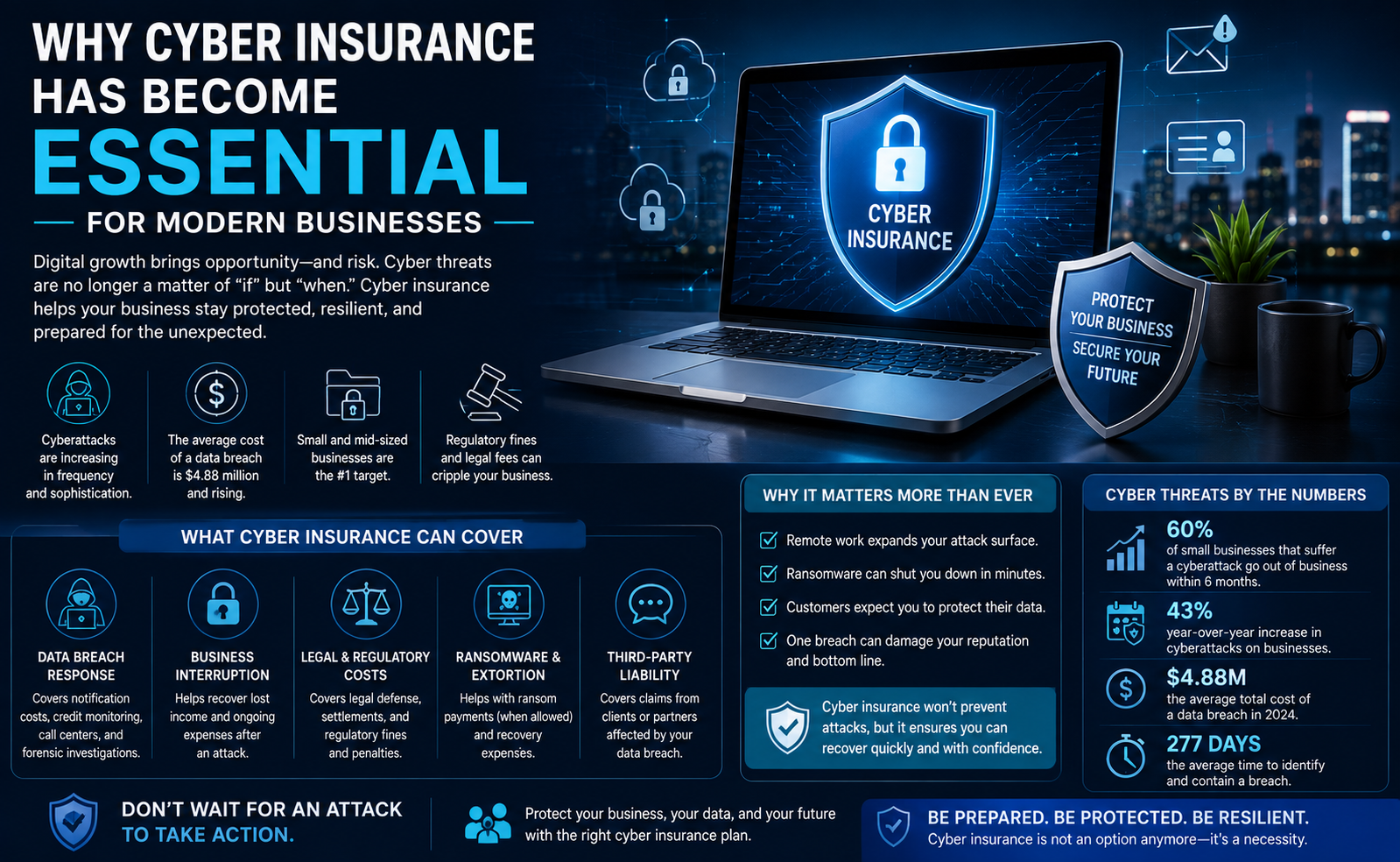
Digital transformation has changed the way businesses operate, making online systems, cloud storage, and digital communication essential parts of everyday work. While these technologies improve efficiency, they also expose organizations to increasing cyber threats. From phishing attacks and ransomware to data breaches and business email compromise, cyber incidents can affect companies of every size.
Contrary to popular belief, cybercriminals do not only target large corporations. Small businesses, startups, freelancers, and medium-sized enterprises are often attractive targets because they may have fewer security resources while still handling valuable customer and financial data.
As cyber risks continue to evolve, businesses need more than strong passwords and antivirus software. Financial protection through cyber insurance has become an important part of a comprehensive risk management strategy.
Why Every Business Should Consider Cyber Insurance
Many business owners assume that cyber insurance is only necessary for technology companies. In reality, organizations across nearly every industry depend on digital systems to manage operations, process payments, store confidential information, and communicate with customers.
Specialized providers like KuV24-cyber.de stand out by offering tailored cyber insurance solutions designed for German businesses and freelancers. With experience in developing insurance concepts since 1990 and a dedicated online insurance portal, they help organizations obtain comprehensive protection against both liability claims and their own cyber-related losses. Investing in the right cyber insurance policy provides confidence, financial security, and greater resilience in an increasingly connected business environment.
Businesses that can benefit from cyber insurance include:
- Retail stores processing online payments
- Healthcare providers managing patient records
- Law firms handling confidential documents
- Manufacturing companies using connected production systems
- Marketing agencies storing client information
- Freelancers working remotely with sensitive project files
- Financial service providers managing customer data
Even a single cyber incident can result in financial losses, legal disputes, business interruption, and reputational damage.
Common Cyber Threats Facing Businesses
Cyber attacks have become increasingly sophisticated. Some of the most common threats include:
Ransomware Attacks
Hackers encrypt business data and demand payment for its release. This can halt operations for days or even weeks.
Phishing Emails
Employees receive deceptive emails designed to steal login credentials or install malicious software.
Data Breaches
Unauthorized access to confidential customer or company information can lead to regulatory penalties and legal claims.
Business Email Compromise
Cybercriminals impersonate executives or trusted partners to trick employees into transferring money or sensitive information.
Malware and Viruses
Malicious software can damage systems, steal information, or disrupt business operations.
The Financial Impact of a Cyber Incident
The cost of recovering from a cyber attack often extends well beyond repairing computer systems. Businesses may face expenses such as:
- IT forensic investigations
- Data recovery
- Customer notification costs
- Legal defense
- Regulatory fines where applicable
- Business interruption losses
- Public relations support
- Compensation claims from affected clients
Without proper insurance protection, these unexpected costs can place significant pressure on a company’s finances.
What Cyber Insurance Typically Covers
Cyber insurance policies are designed to provide financial protection against a wide range of digital risks. Coverage often includes both third-party liability and first-party losses.
Common areas of protection may include:
Liability Protection
If customer data is compromised or third parties suffer financial losses because of a cyber incident, liability coverage can help manage legal costs and compensation claims.
Own Damage Coverage
Businesses may receive support for expenses related to restoring systems, recovering lost data, and minimizing operational disruption after an attack.
Business Interruption
If operations must be suspended because of a cyber event, insurance may help compensate for lost income during the recovery period.
Incident Response Support
Many policies also provide access to cybersecurity specialists, legal advisors, and crisis communication experts who assist businesses throughout the recovery process.
Cyber Insurance Is Valuable for Freelancers Too
Freelancers often believe they are too small to attract cybercriminals. However, independent professionals frequently manage sensitive client information, invoices, contracts, and intellectual property.
Graphic designers, software developers, consultants, accountants, and digital marketers all rely heavily on connected devices and online platforms. A successful cyber attack could interrupt projects, expose confidential client data, and damage professional reputation.
Cyber insurance helps freelancers reduce financial risks while demonstrating professionalism to clients who value secure business practices.
The Importance of Choosing Specialized Insurance Expertise
Cyber insurance is a highly specialized field that requires a deep understanding of both digital risks and insurance solutions. Rather than selecting a generic policy, businesses benefit from providers that focus specifically on cyber protection and tailor coverage to individual business needs.
Providers with decades of insurance experience are often better equipped to develop comprehensive protection concepts that address today’s rapidly changing threat landscape.
Tailored Insurance Solutions for Different Industries
No two businesses face identical cyber risks. A retail company has different exposures than a law office or healthcare provider.
Customized insurance solutions allow businesses to receive protection that reflects factors such as:
- Company size
- Industry sector
- Type of customer data handled
- Annual revenue
- Digital infrastructure
- Regulatory requirements
- Remote working arrangements
This personalized approach ensures businesses avoid paying for unnecessary coverage while still protecting against relevant risks.
Why Experience Matters in Cyber Insurance
Developing effective insurance concepts requires years of industry knowledge. Insurance specialists with experience dating back to 1990 have witnessed the evolution of digital risks from simple computer viruses to today’s sophisticated ransomware operations and large-scale data breaches.
This long-standing expertise enables them to understand changing regulations, emerging cyber threats, and the practical insurance solutions businesses need to remain protected.
The Convenience of Online Insurance Applications
Today’s businesses value efficiency, and modern insurance services increasingly reflect that expectation. Specialized online insurance portals simplify the process of obtaining cyber coverage by allowing businesses and freelancers to compare options, submit applications, and receive tailored insurance solutions digitally.
This streamlined approach saves valuable time while making professional cyber protection more accessible to organizations of all sizes.
Building Long-Term Business Resilience
Cybersecurity should never rely on a single layer of protection. Strong passwords, employee awareness training, regular software updates, secure backups, and multi-factor authentication all play important roles.
However, even organizations with excellent security measures can become victims of cybercrime. Cyber insurance serves as an additional safety net that helps businesses recover financially and operationally after an unexpected incident.
Conclusion
As digital threats continue to grow in frequency and sophistication, cyber insurance has become an essential investment rather than an optional expense. Businesses and freelancers across every industry face the possibility of cyber attacks that can result in significant financial losses and operational disruption.
