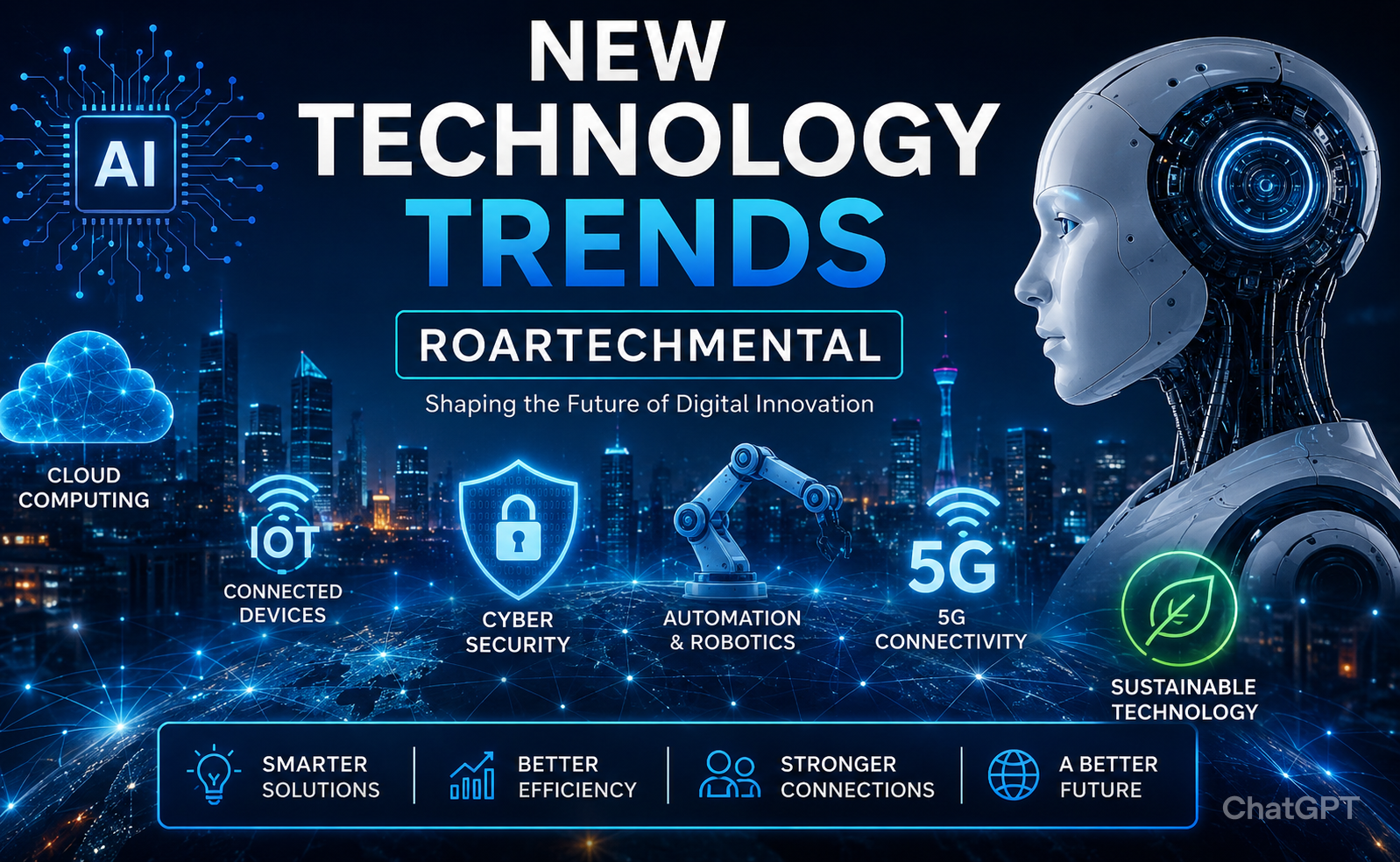
Technology is evolving faster than ever, changing the way we live, work, communicate, and do business. As innovation continues to accelerate, many people are looking for insights into new technology trends roartechmental to better understand the developments shaping industries around the world. From artificial intelligence and automation to smart devices and advanced cybersecurity, today’s technological breakthroughs are opening doors that seemed impossible just a few years ago.
Businesses, consumers, and governments are all adapting to an increasingly digital world. Keeping up with emerging technologies helps organizations stay competitive while enabling individuals to prepare for the future. In this article, we’ll explore some of the most influential technology trends, their impact on society, and what we can expect in the years ahead.
Why Technology Trends Matter
Technology trends are not just short-lived innovations or passing fads. They often signal long-term changes that reshape industries, economies, and everyday life. Organizations that recognize these trends early can improve efficiency, lower costs, and create better experiences for their customers.
Consumers also benefit from technological advancements. Faster communication, smarter applications, and more personalized digital services make daily activities easier and more convenient. As digital transformation continues to gain momentum, staying informed about new developments has become more important than ever.
The Rise of Artificial Intelligence
Artificial intelligence (AI) remains one of the most transformative technologies of our time. Modern AI systems can process enormous amounts of data, identify patterns, and assist with decision-making at remarkable speed. The rapid growth of AI has also sparked interest in technology investments, with many investors looking back at topics such as How A A Shere Nvidia In 2010 could have evolved into a significant opportunity. As AI continues to drive innovation across industries, companies developing advanced computing hardware and intelligent software solutions are gaining increasing attention in the global technology mar
AI in Everyday Life
Most people interact with AI more often than they realize. Virtual assistants, voice recognition software, streaming recommendations, and customer support chatbots all rely on machine learning and intelligent algorithms.
Businesses are also using AI to better understand customer behavior, improve marketing strategies, and streamline operations. In healthcare, AI-powered tools are helping professionals support diagnostics, patient monitoring, and treatment planning.
AI and Business Innovation
Across industries, organizations are investing heavily in AI-driven solutions. These technologies automate repetitive tasks, allowing employees to focus on higher-value work that requires creativity and strategic thinking.
As computing capabilities continue to improve, AI is expected to become even more powerful, accessible, and integrated into everyday business operations.
Cloud Computing Continues to Grow
Cloud computing has completely transformed how organizations store, manage, and access information. Rather than relying solely on physical servers, businesses can use scalable digital infrastructure hosted remotely.
Benefits of Cloud Adoption
Cloud platforms offer flexibility, cost savings, and improved collaboration. Employees can securely access files, applications, and data from virtually anywhere with an internet connection.
Cloud solutions also support business continuity by reducing reliance on on-site hardware. As remote and hybrid work environments become more common, cloud technology remains a cornerstone of modern business operations.
What’s Next for Cloud Technology?
Future cloud innovations are expected to focus on stronger security, faster processing power, and deeper integration with artificial intelligence. Many organizations are also adopting hybrid and multi-cloud strategies to increase flexibility and reduce operational risks.
The Growth of Smart Devices and IoT
The Internet of Things (IoT) refers to a network of connected devices that collect, share, and analyze data. Smart technology is becoming increasingly common in homes, workplaces, and cities around the world.
Smart Homes and Connected Living
From smart speakers and thermostats to connected security systems and wearable devices, consumers are embracing technology that makes life more convenient and efficient.
As manufacturers continue improving compatibility between devices, smart home ecosystems are becoming more seamless and user-friendly.
Industrial Applications of IoT
Beyond consumer use, IoT is transforming sectors such as manufacturing, logistics, healthcare, and agriculture. Connected sensors can monitor equipment performance, track inventory, and provide real-time insights that improve productivity.
These capabilities help organizations make better decisions, reduce waste, and optimize resource management.
Cybersecurity Becomes a Top Priority
As digital adoption increases, so do cybersecurity challenges. Businesses and individuals face growing threats from cyberattacks, data breaches, and online fraud.
Emerging Security Technologies
Advanced cybersecurity systems now use artificial intelligence to identify unusual activity and detect potential threats before they cause serious damage.
Technologies such as multi-factor authentication, encryption, and zero-trust security frameworks are becoming standard practices across many industries.
Protecting Digital Assets
Organizations are investing heavily in stronger security measures to protect customer information and maintain trust. Employee awareness training is also becoming an essential part of cybersecurity strategies.
The future of digital innovation depends on creating systems that are both powerful and secure.
Automation and Robotics
Automation is changing how businesses operate by increasing efficiency and reducing the need for repetitive manual tasks. Modern robotics systems are becoming more advanced and capable of handling increasingly complex responsibilities.
Transforming Manufacturing
Manufacturers are adopting robotic technologies to improve production quality, consistency, and speed. Automated systems can operate around the clock, helping businesses meet rising demand while lowering operational costs.
Automation Beyond Factories
Automation is no longer limited to manufacturing. Industries such as healthcare, retail, finance, and customer service are implementing digital solutions that streamline workflows and enhance customer experiences.
As technology continues to evolve, automation will likely play an even bigger role in daily operations across nearly every sector.
The Impact of 5G Connectivity
The rollout of 5G networks is creating new opportunities for innovation by delivering faster internet speeds, lower latency, and improved connectivity.
Better Digital Experiences
Consumers benefit from smoother video streaming, faster downloads, more responsive online gaming, and improved mobile performance.
Businesses can also leverage high-speed networks to support advanced applications, remote collaboration, and real-time data sharing.
Powering Future Technologies
5G is expected to accelerate the growth of autonomous vehicles, smart cities, augmented reality experiences, and connected devices. It serves as a critical foundation for many emerging technologies.
Sustainable Technology Innovations
Environmental concerns are increasingly influencing technology development. Companies are focusing on creating solutions that reduce energy consumption and minimize environmental impact.
Green Computing
Technology providers are investing in energy-efficient hardware, renewable energy sources, and environmentally responsible data centers. These efforts help organizations improve sustainability while maintaining operational performance.
Smarter Resource Management
Advanced analytics and connected systems enable businesses to monitor energy usage, identify inefficiencies, and reduce waste.
As sustainability becomes a global priority, environmentally conscious innovation is expected to remain a major focus for technology leaders.
The Future of Digital Innovation
Emerging Opportunities
The coming decade is likely to bring major advancements in artificial intelligence, quantum computing, biotechnology, and immersive digital experiences. These technologies have the potential to transform industries in ways we are only beginning to imagine.
Organizations that embrace innovation and adapt to technological change will be better positioned for long-term growth and success.
Preparing for Change
In a rapidly evolving digital landscape, continuous learning is essential. Businesses and individuals must stay informed, remain flexible, and invest in the skills and technologies needed to thrive in the future.
Conclusion
The growing interest in new technology trends roartechmental reflects the importance of understanding the innovations shaping tomorrow’s world. Artificial intelligence, cloud computing, cybersecurity, IoT, automation, 5G connectivity, and sustainable technology are all driving a new era of digital transformation.
As these technologies continue to evolve, they will create exciting opportunities for businesses, governments, and individuals alike. Staying informed and embracing change will be key to succeeding in an increasingly connected and technology-driven future.
Disclaimer
The information provided in this article is intended for general informational and educational purposes only. While every effort has been made to ensure the accuracy and relevance of the content at the time of publication, technology trends and industry developments can change rapidly. Readers should independently verify information before making business, financial, technological, or strategic decisions based on the content presented.
